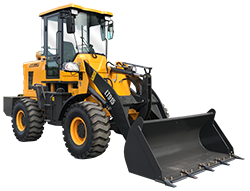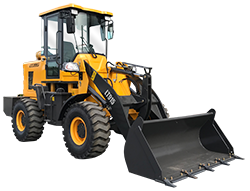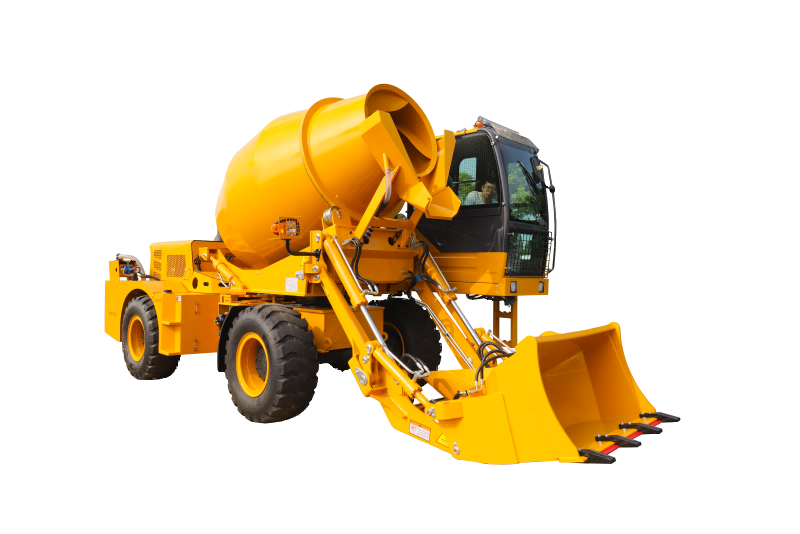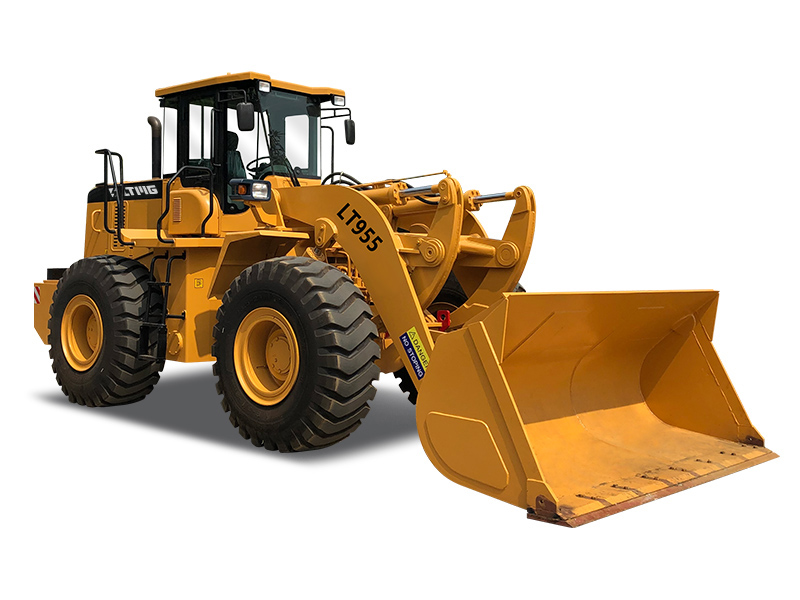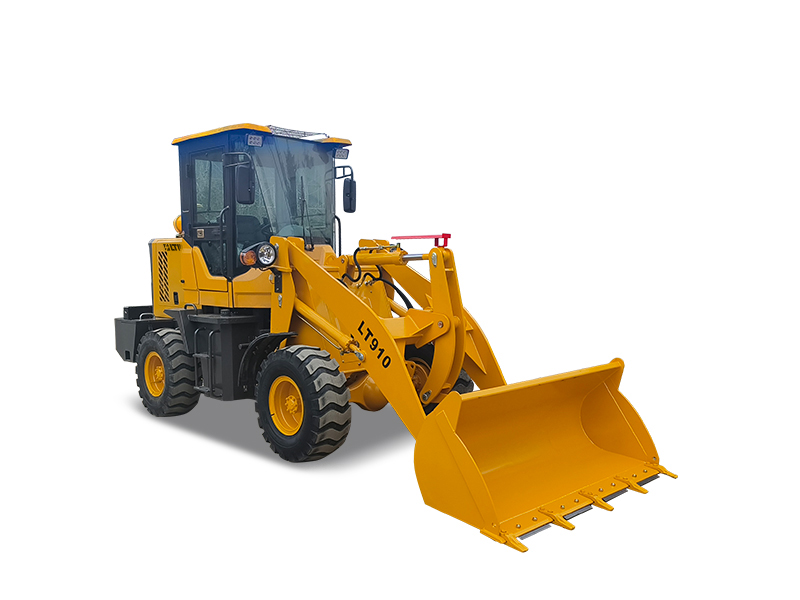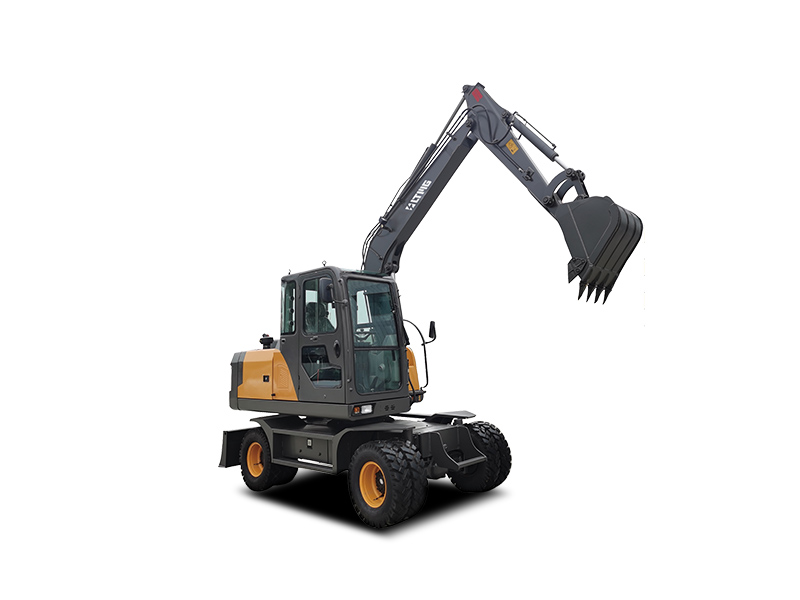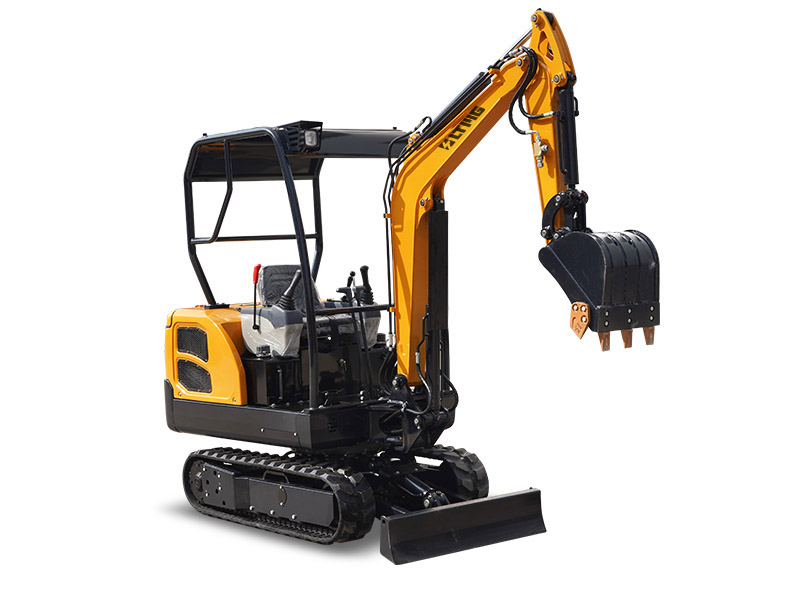
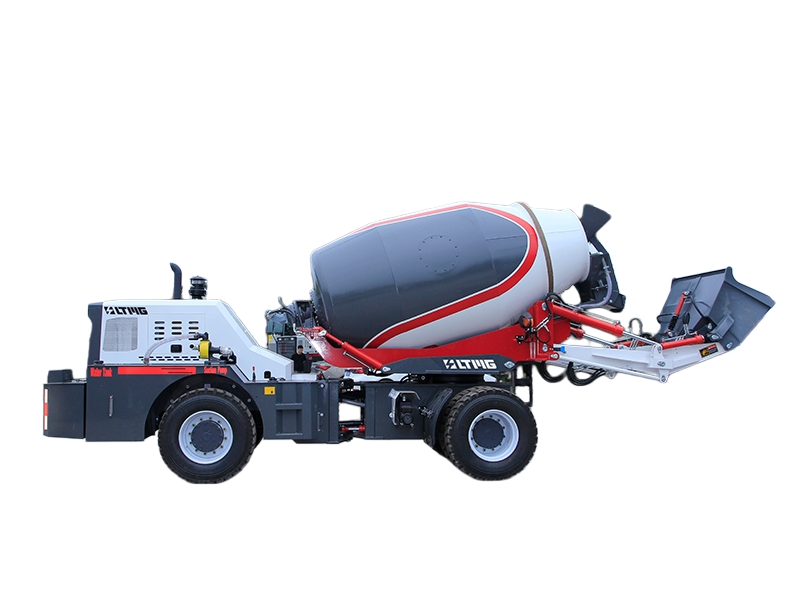
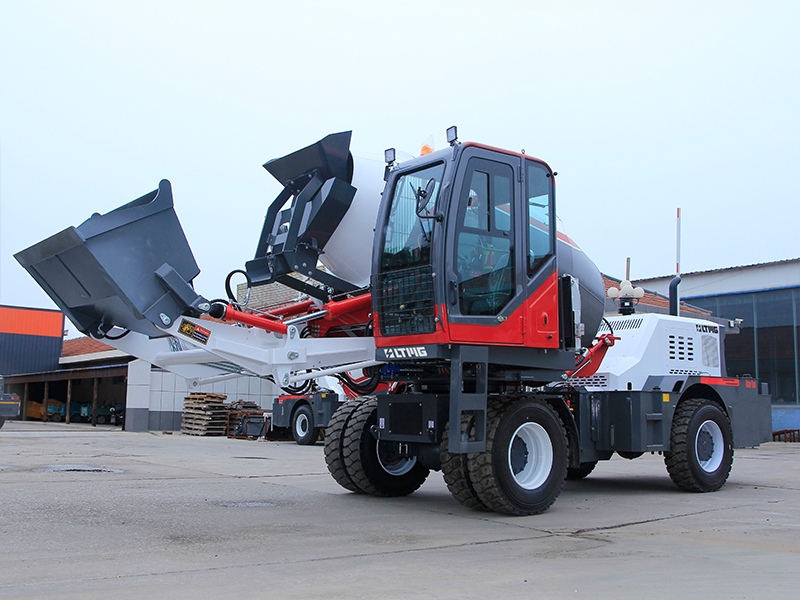
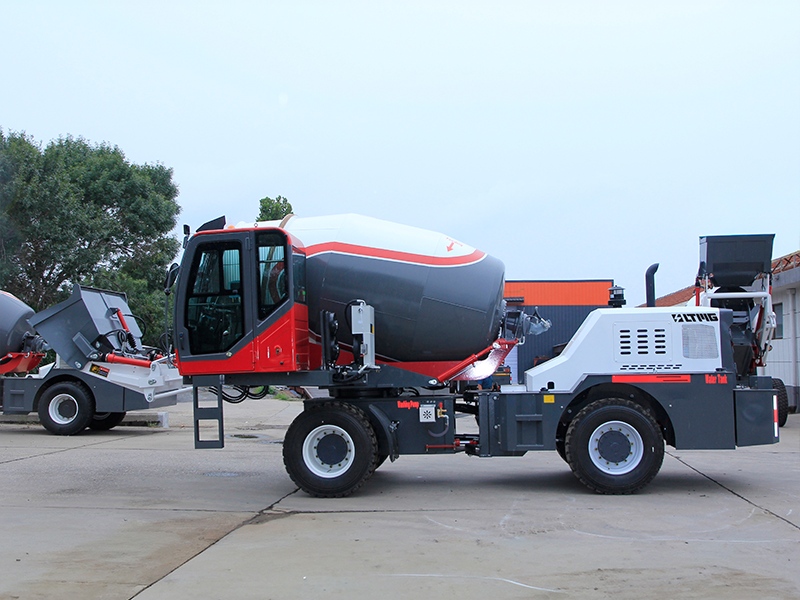
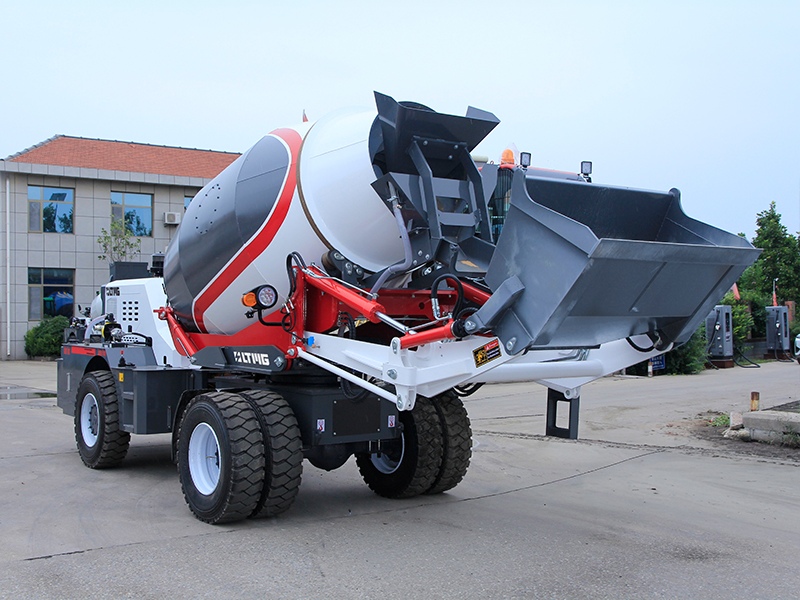
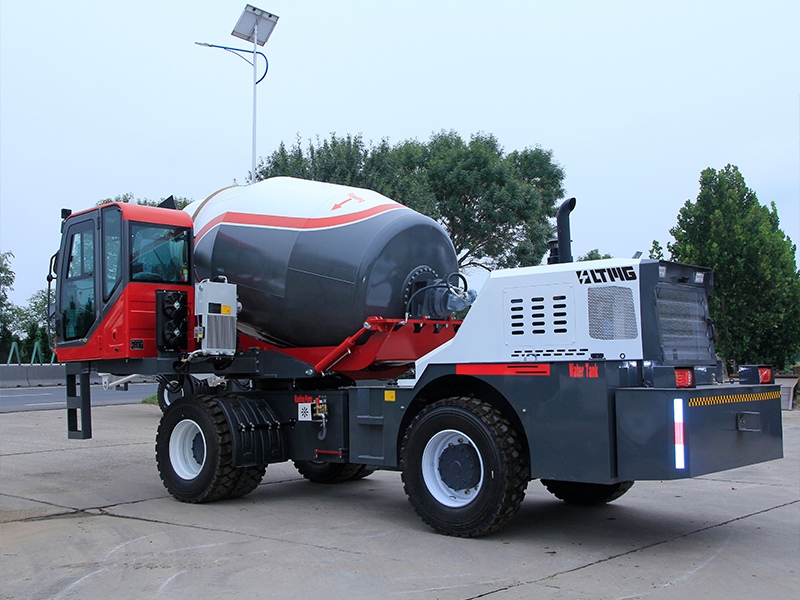
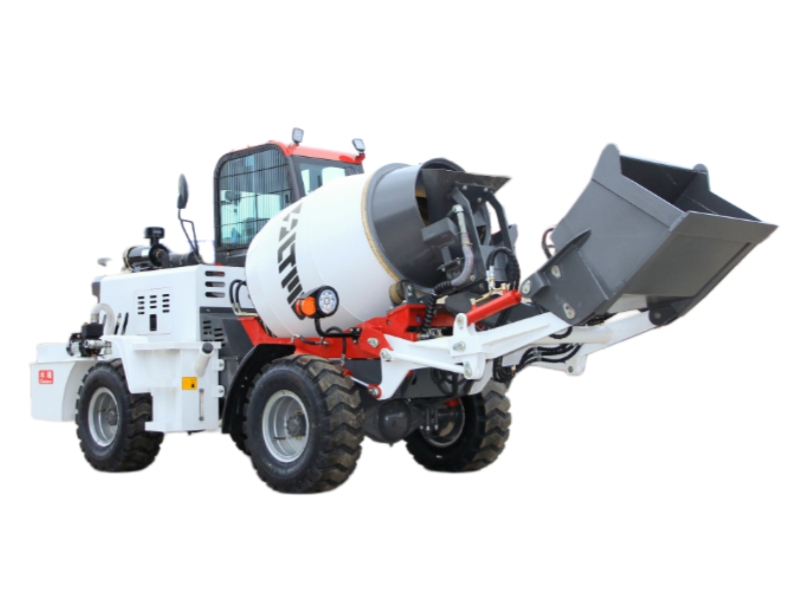
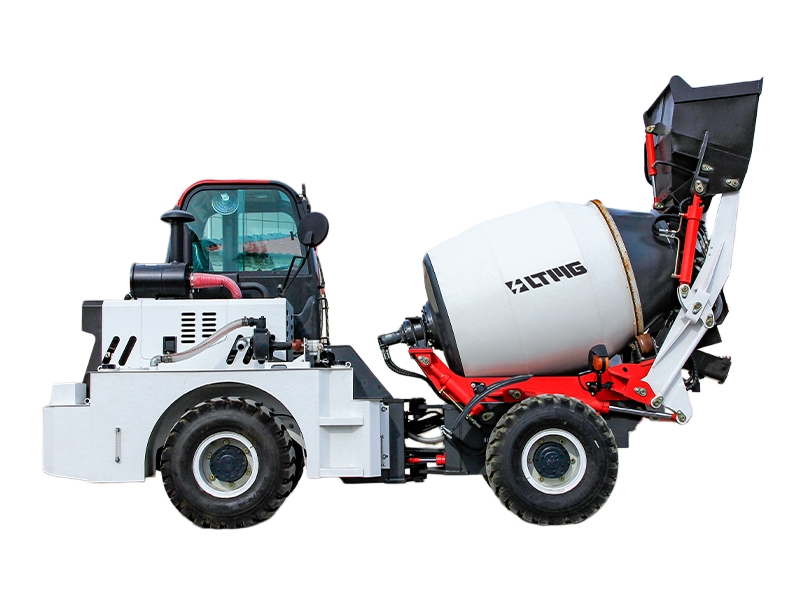
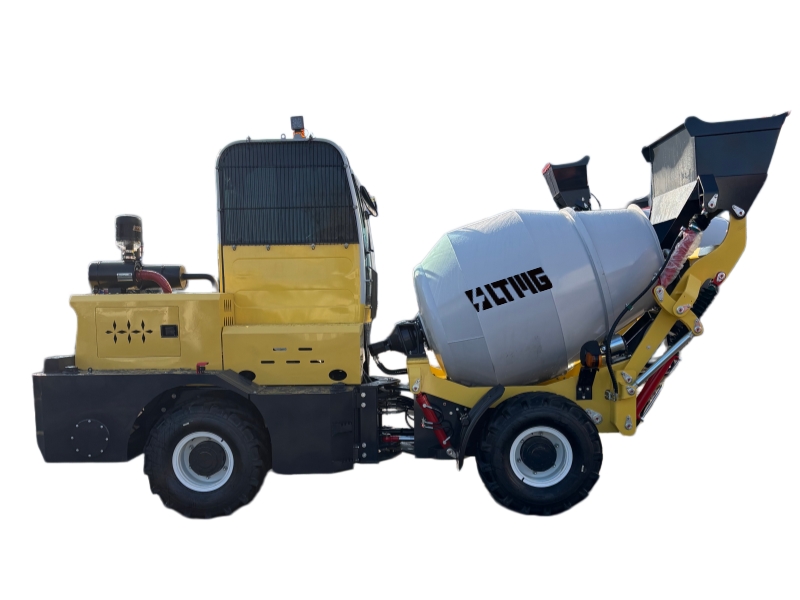
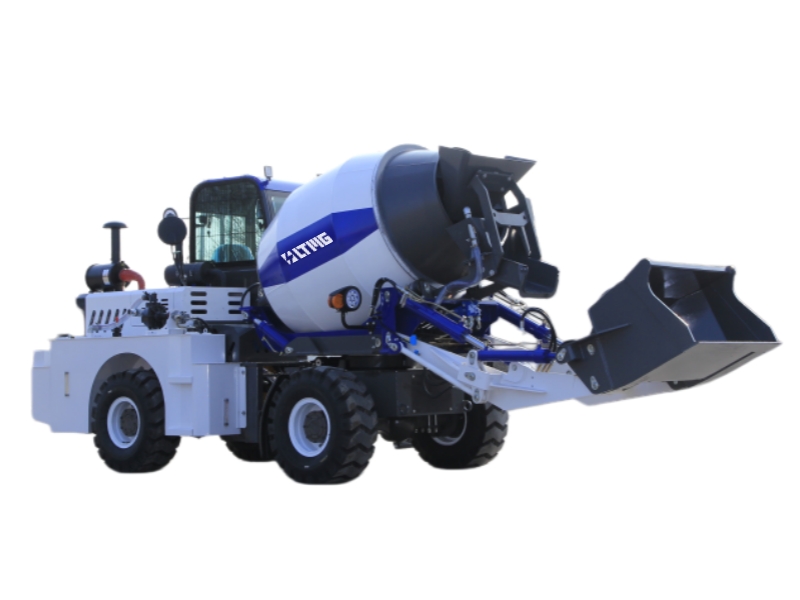
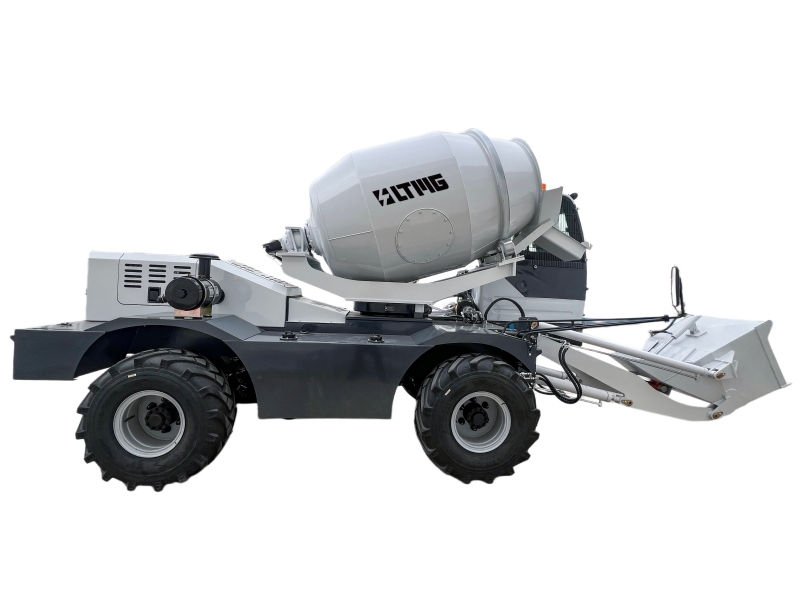
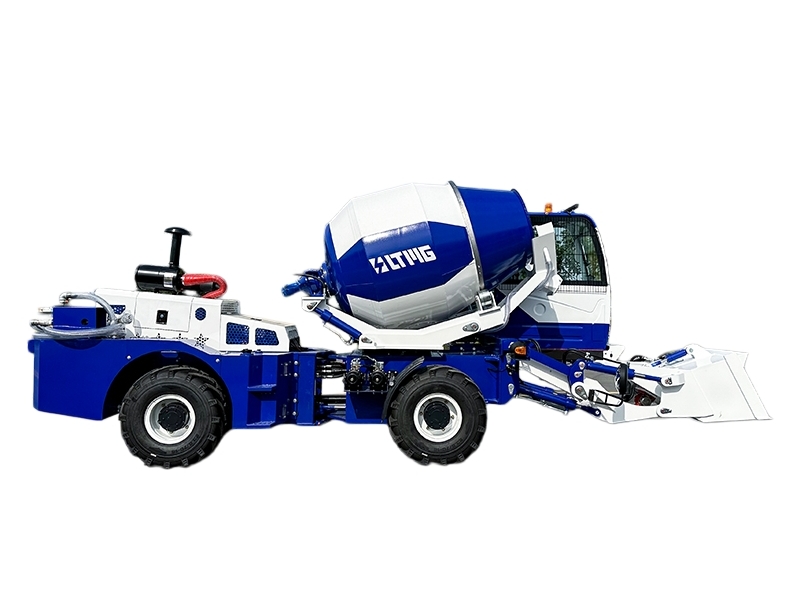
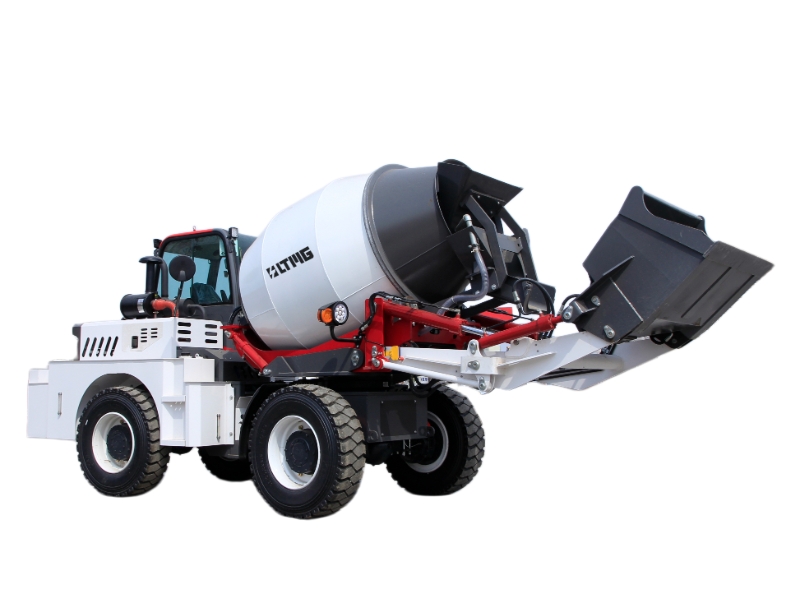
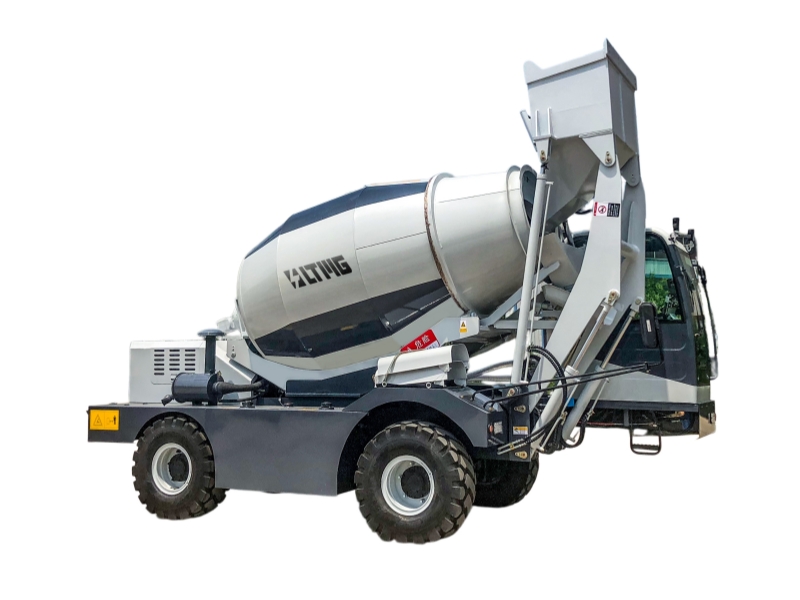
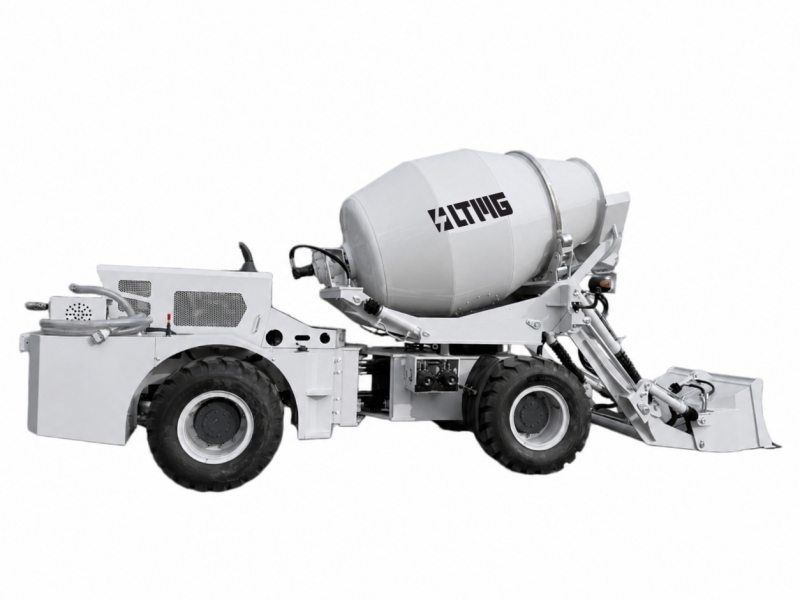
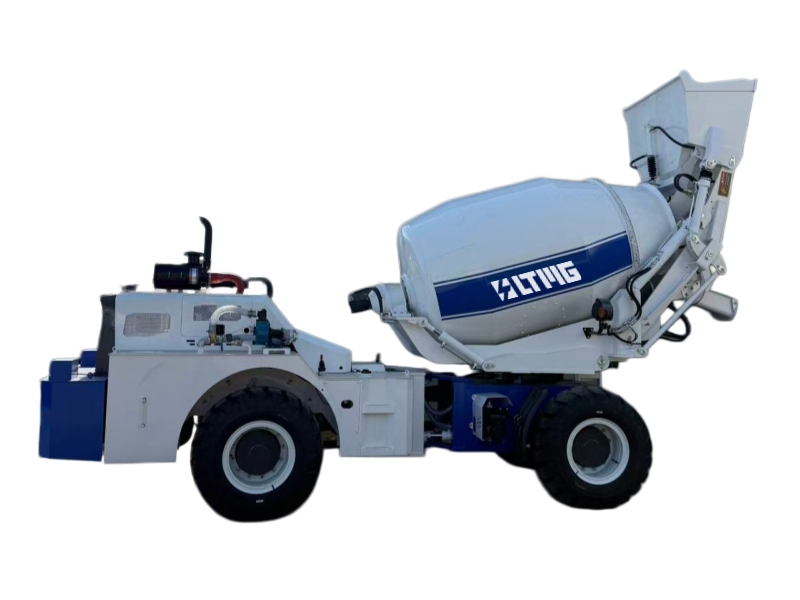
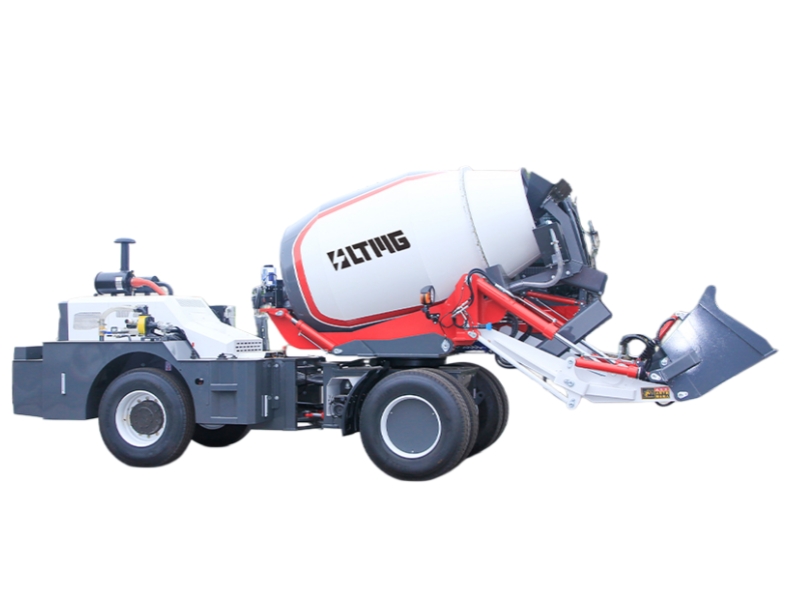
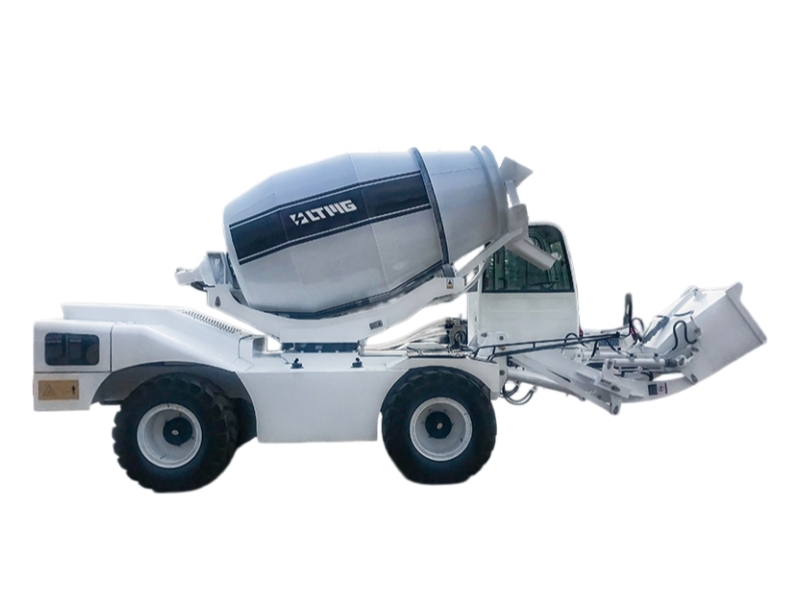
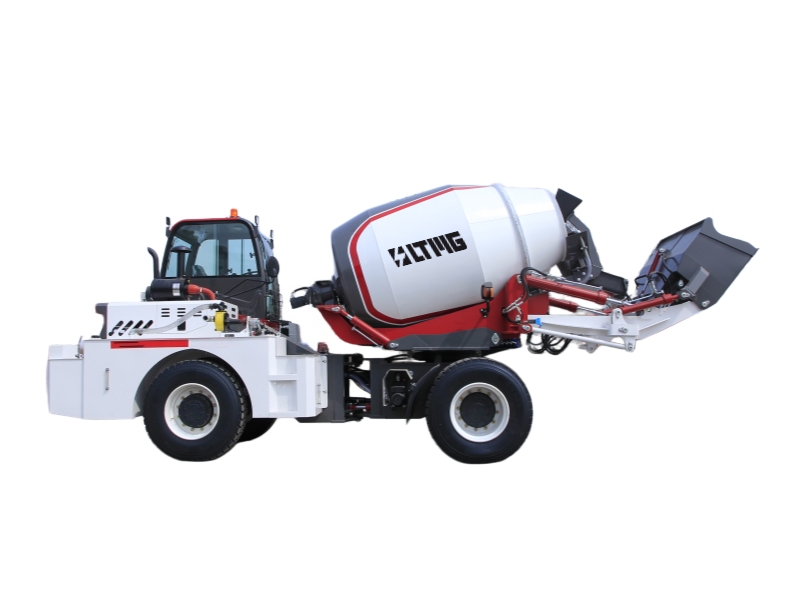
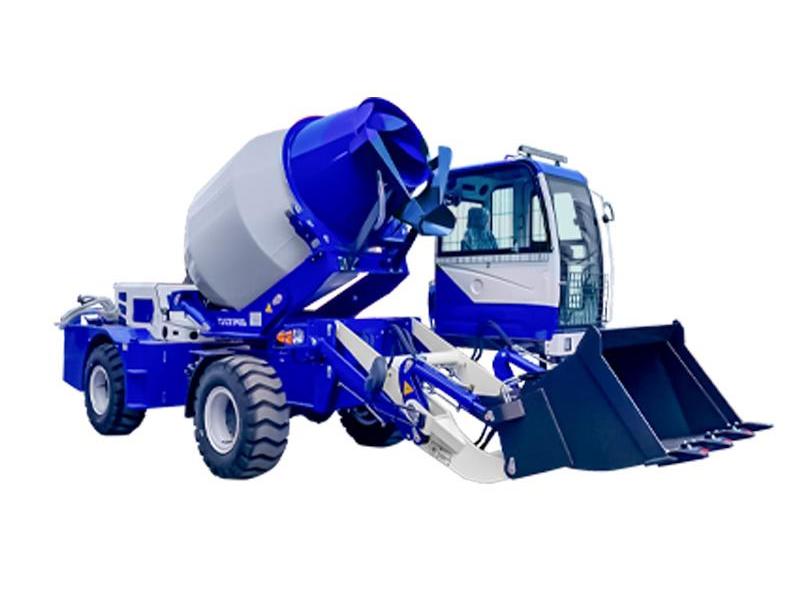
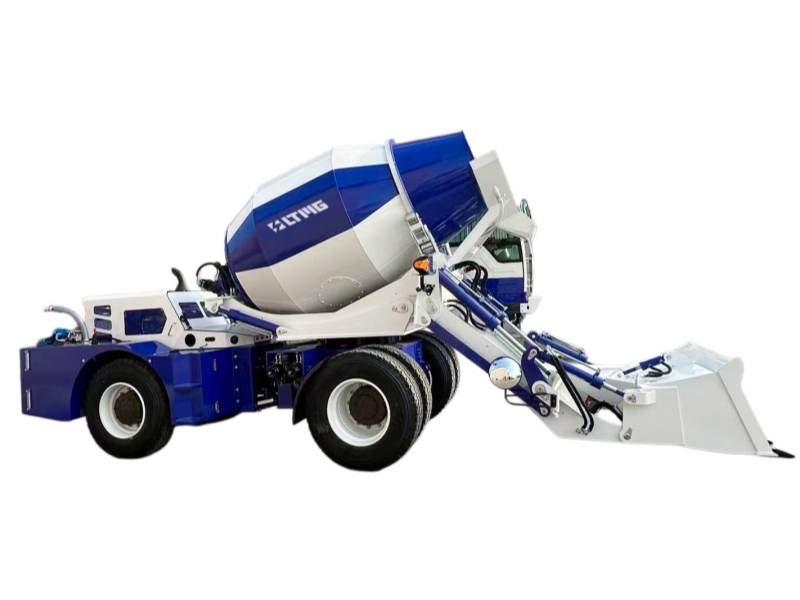
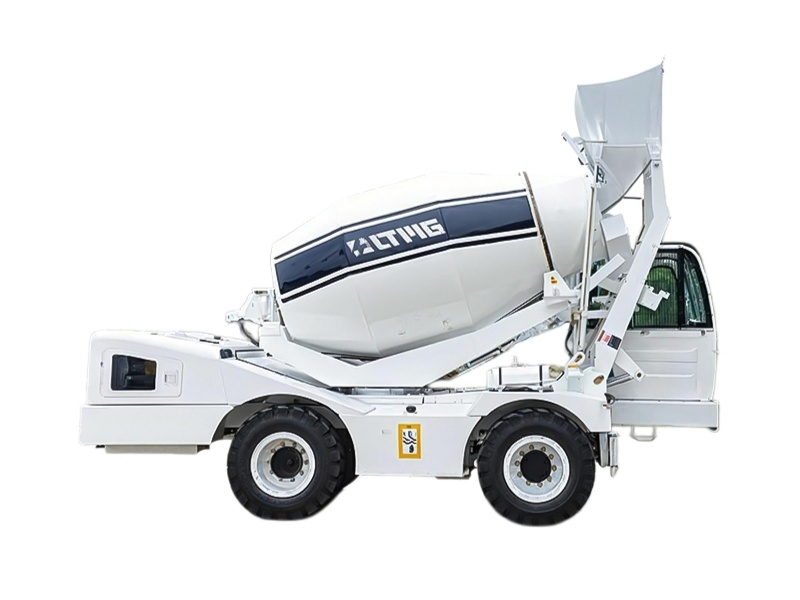
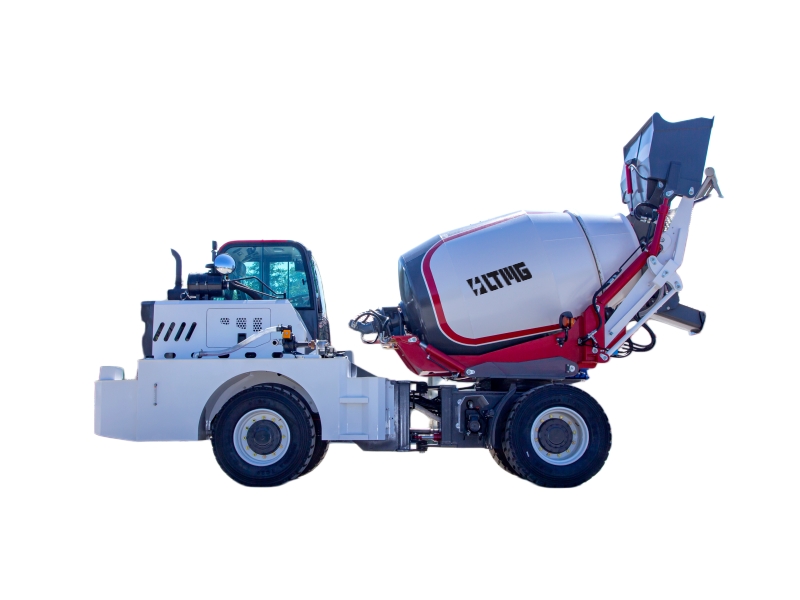
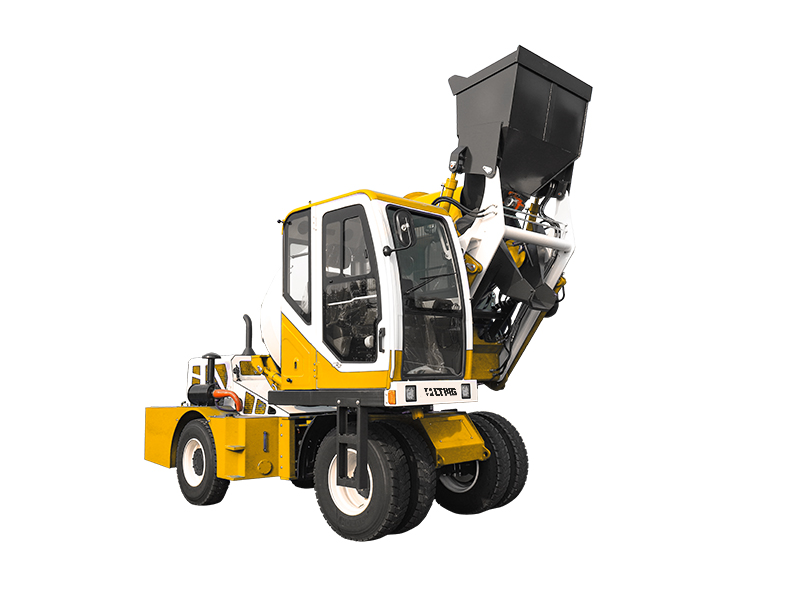
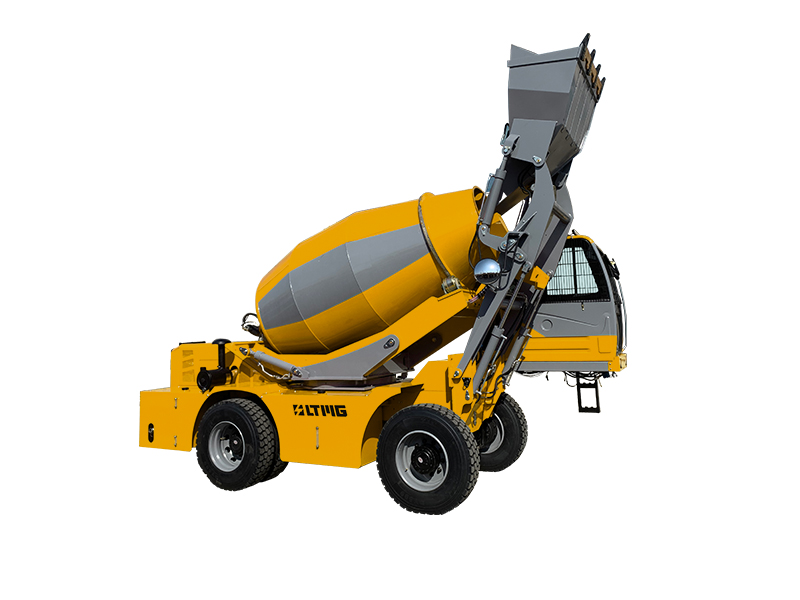
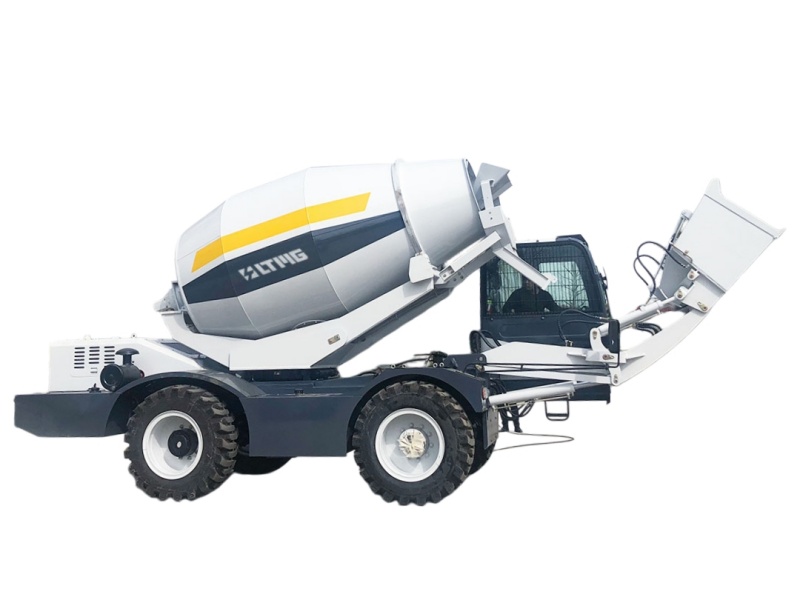
Le camion malaxeur à béton de 5 m³ combine les fonctions de chargement, de malaxage, de transport et de déchargement pour une production de béton efficace sur chantier. Performant, flexible et offrant un confort de conduite optimal, il est idéal pour les projets de construction, les travaux routiers, les fondations et les chantiers exigeants.
Modèle :
LTM50Lester :
12500 KGLongueur Largeur hauteur :
7360 × 3100 × 4640 (Lifting arm) mm


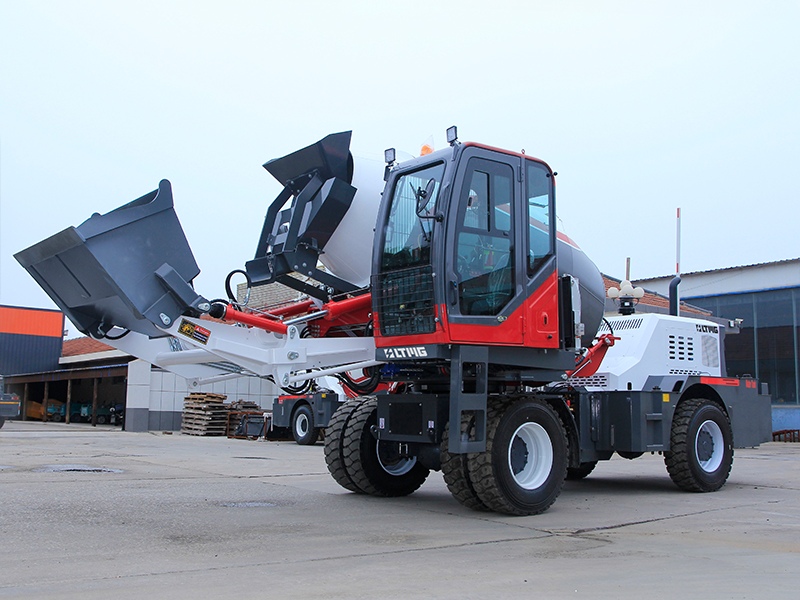
Caractéristiques du camion malaxeur à béton automoteur
1. Production de béton efficace et exploitation intégrée : Le système intégré de chargement, de mélange, de transport et de déchargement rationalise la production de béton sur site, réduisant la manutention des matériaux et améliorant l'efficacité et la productivité globales de la construction.
2. Performances exceptionnelles et conception robuste : Le puissant moteur diesel, la transmission robuste et le châssis articulé offrent une traction puissante et un fonctionnement stable, permettant à la bétonnière de fonctionner de manière fiable sur les terrains accidentés et les chantiers de construction exigeants.
3. Fonctionnement flexible et déchargement aisé du béton : La rotation synchrone du tambour de malaxage et de la cabine du conducteur offre une plus grande flexibilité pour le positionnement et le déchargement du béton. Le système hydraulique et les commandes pilotées garantissent un fonctionnement souple, réactif et pratique.
4. Conduite confortable et visibilité améliorée : La cabine ergonomique est équipée d'un siège à absorption de chocs, d'un tableau de bord numérique, de caméras avant et arrière, d'un écran, d'un éclairage LED et d'un pare-brise avant relevable, créant un environnement de travail plus confortable et pratique.
La spécification de Camion malaxeur à béton auto-chargeur
| Paramètre | Unité | LTM50 |
| Dimensions du véhicule (L × l × H) | mm | 7360 × 3100 × 4640 (Bras de levage) ; 8580 × 3100 × 3560 (Bras d'abaissement) |
| Empattement | mm | 3200 |
| Largeur de voie | mm | 1845 |
| Poids total | kg | 12500 |
| Moteur | / | YC6J125Z-T20 |
| Pouvoir | kW | 92 |
| Boîte de vitesse | / | 315 Séparés |
| Essieu moteur | / | Essieu avant 30S à bain d'huile / Essieu arrière 30 |
| Pneu | / | Pneu double 16/70-R22.5 |
| Capacité du seau | m³ | 0,7 |
| Capacité d'agitation | m³ | 5 |
| Taux de réduction | / | 0,113194444 |
| Vitesse de rotation du tambour | tr/min | ≥15 |
| Réducteur | / | HL6F-B2700 |
| vitesse de course | km/h | 35 |
| Numéro d'arbre Type de traction | / | 4×4 |
| Capacité du réservoir d'eau | L | 1070 |
| Capacité du réservoir de diesel | L | 180 |
| Capacité du réservoir hydraulique | L | 180+35 |
Grâce aux innovations technologiques, la configuration et les paramètres de nos produits continueront d'évoluer sans préavis ;
En cas de doute, la confirmation spécifique de nos ventes commerciales internationales fera foi ;
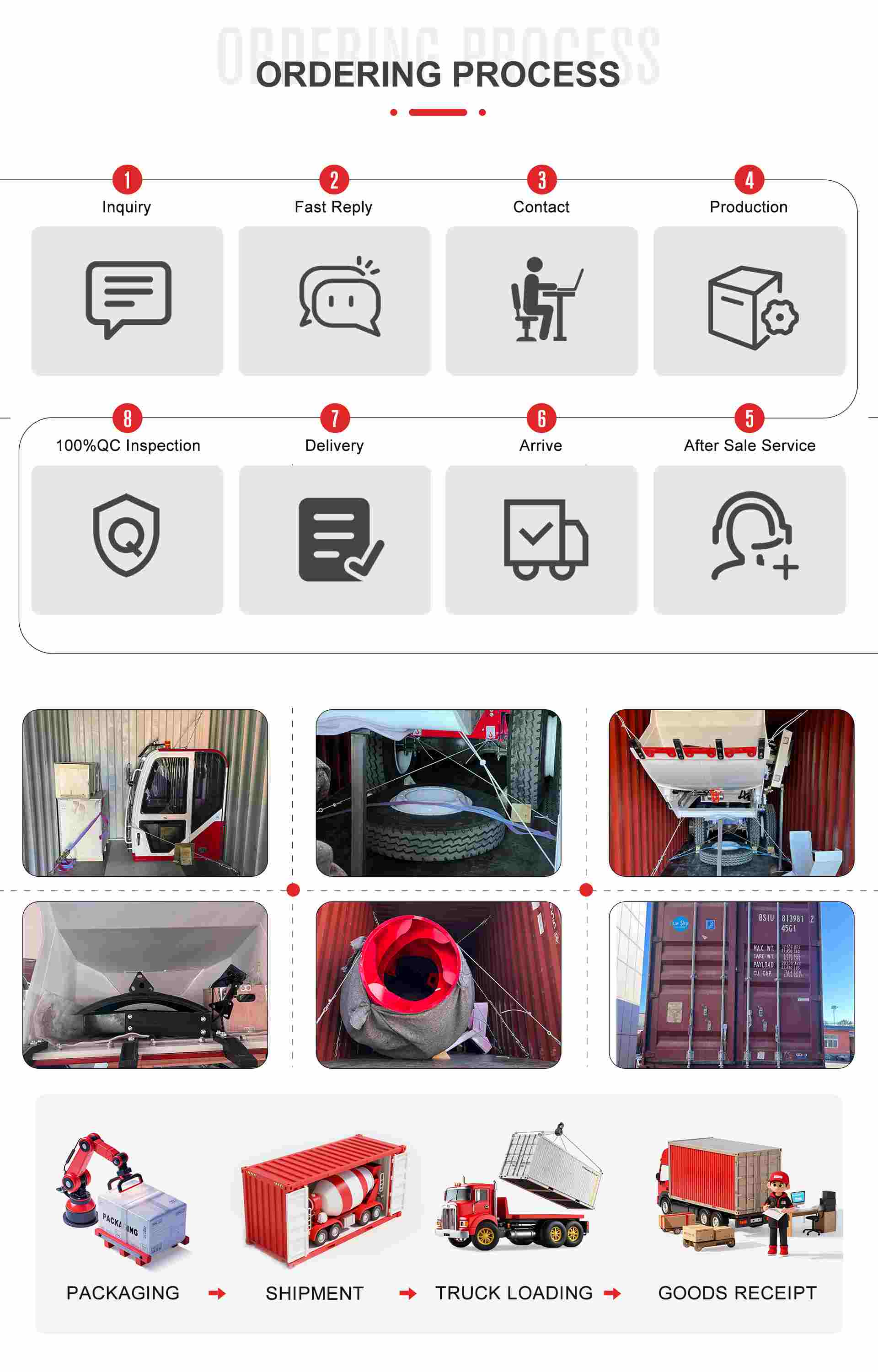
Commande et procédure pour une bétonnière
FAQ
A : Le rendement horaire d'une bétonnière automotrice dépend de son cycle de fonctionnement complet et non de la seule capacité de sa cuve. Le chargement des matériaux, l'ajout d'eau et de ciment, le malaxage, le transport jusqu'au point de coulage et le déchargement influent tous sur l'efficacité de la production. Un stockage centralisé des matériaux, des distances de transport courtes, une bonne organisation du chantier et un opérateur expérimenté peuvent augmenter le rendement, tandis que des matériaux dispersés, de longues distances de transport ou un mauvais état des routes peuvent le réduire. Pour une estimation précise, il convient de prendre en compte la capacité de la bétonnière, l'emplacement des matériaux, la distance de transport, la distance de déchargement et les conditions réelles du chantier.
Q : Une bétonnière à chargement automatique peut-elle produire du béton avec un dosage précis ?
R : Oui. Une bétonnière automotrice peut respecter un dosage de béton précis si elle est équipée d'un système de pesage adapté et utilisée correctement. Le sable et les granulats sont généralement chargés dans le godet avant, l'eau est dosée par le réservoir et le système de dosage intégrés, et le ciment peut être ajouté en sacs, big bags ou autres contenants appropriés. Pour des proportions de mélange précises, un système de pesage électronique et un doseur d'eau sont recommandés, avec un étalonnage régulier pour garantir la précision. Lors du respect d'un dosage élaboré en laboratoire, les quantités de matériaux doivent être mesurées avec précision et non estimées par comptage des godets.
Q : Une bétonnière automotrice est-elle adaptée aux chantiers en zone montagneuse et hors route ?
R : Oui, certaines bétonnières automotrices sont spécialement conçues pour les environnements de construction exigeants et peuvent être équipées de quatre roues motrices, de pneus tout-terrain renforcés et d'une garde au sol élevée. Ces caractéristiques améliorent la mobilité sur les routes de montagne, les terrains boueux, les chemins ruraux, les zones minières et autres terrains non pavés. Cependant, les capacités tout-terrain varient selon les modèles, et les conditions extrêmement boueuses ou escarpées peuvent nécessiter des précautions supplémentaires. Lors du choix d'une bétonnière pour terrain difficile, il convient d'évaluer la pente maximale, la largeur de la route, l'état du sol, les précipitations et la charge prévue. Une bétonnière automotrice 4x4 équipée de pneus tout-terrain adaptés peut offrir une meilleure traction et une mobilité accrue dans les applications difficiles.
Q : Quelles sont les principales considérations de sécurité relatives à l'utilisation d'une bétonnière automotrice sur des pentes ?
A : Le fonctionnement en pente exige une attention particulière car le béton contenu dans la cuve de malaxage se déplace pendant le déplacement, créant une charge dynamique et pouvant modifier le centre de gravité de la machine. La capacité de franchissement d'une bétonnière automotrice vide ne constitue donc pas une garantie suffisante pour un fonctionnement sûr à pleine charge. Sur terrain escarpé, évitez les franchissements latéraux, les virages brusques et les descentes à vitesse excessive, et maintenez la charge dans la plage recommandée. Pour les chantiers en zone montagneuse, la connaissance préalable des pentes longitudinales et latérales maximales permet de choisir la bétonnière adaptée en fonction de son poids en ordre de marche, de sa transmission, de son système de freinage, de ses pneumatiques et de sa stabilité générale.
MOTS CLÉS :
Tél : +86 195 5920 7570
E-mail : market@ltmg.com
WhatsApp : +86 195 5920 7570
Ajouter : LTMG Group, Electronics City(Xiamen) International Innovation Center, No.23, Duiying Road, Jimei District, Xiamen, China
Obtenez les dernières informations sur le produit et les informations sur l'offre