Comment choisir le rouleau compresseur adapté aux différents types de sols
Aug 31, 2026
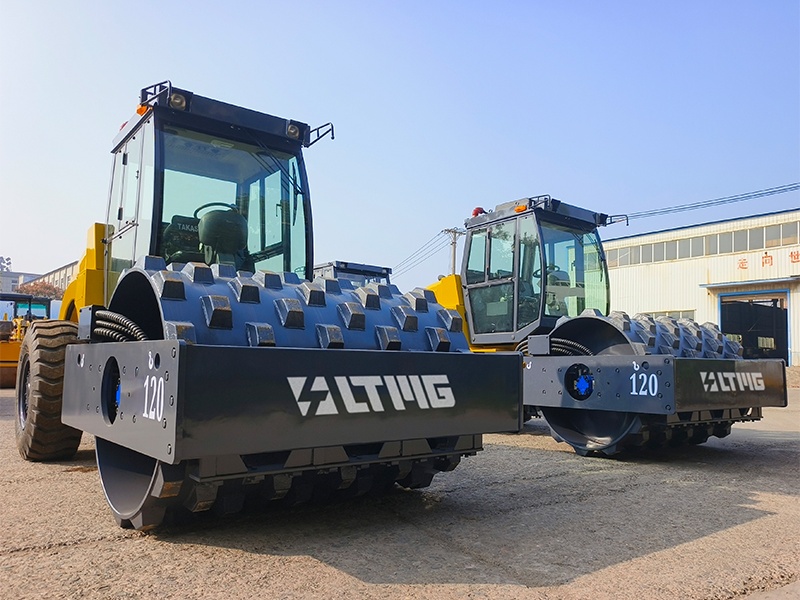
Choisir un rouleau compresseur Il ne s'agit pas simplement de choisir la machine ayant le poids opérationnel le plus élevé. Même si deux rouleaux ont des poids opérationnels similaires, leurs performances de compactage peuvent varier considérablement si le type de tambour, les paramètres de vibration, la vitesse de fonctionnement ou le mécanisme de compactage ne sont pas adaptés aux conditions du sol sur le chantier.Pour les entreprises de construction routière et les sociétés d'ingénierie, la vraie question est simple : Quel type de rouleau compresseur permet d'obtenir le compactage requis en moins de passages, avec une consommation de carburant réduite et une efficacité opérationnelle accrue ?La réponse commence par le type de sol.Le sable, le gravier, l'argile, le limon et les matériaux de remblai mixtes réagissent différemment au compactage. Les sols granulaires se prêtent généralement mieux au compactage vibratoire, tandis que les sols cohésifs nécessitent souvent un malaxage ou un damage. La teneur en eau, l'épaisseur de la couche, l'amplitude, la fréquence de vibration et la vitesse de déplacement du rouleau peuvent également influencer considérablement le résultat final du compactage.Cet article explique comment choisir le rouleau compresseur adapté aux différents types de sols. Pourquoi le type de sol est important lors du choix d'un rouleau compresseur Le but principal du compactage des sols est de réduire les vides d'air dans le sol, permettant ainsi aux particules de se réorganiser en une structure plus dense et plus stable. Un compactage adéquat peut :·Augmenter la capacité portante des fondations·Réduire le risque de règlement futur·Améliorer la stabilité des couches de fondation et des couches de base·Fournir une base plus fiable pour les chaussées, les remblais et autres structures Cependant, différents types de sols nécessitent différentes méthodes de compactage.Du point de vue du compactage, les sols courants peuvent généralement être divisés en deux catégories :·Sols granulaires, comme le sable, le gravier et les pierres concassées calibrées. Ces matériaux présentent une cohésion relativement faible entre leurs particules et sont donc parfaitement adaptés au compactage vibratoire.·Sols cohésifs, comme l'argile et le limon plastique. Ces sols contiennent une grande proportion de particules fines présentant une cohésion importante et se compactent généralement mieux par pression combinée à un mouvement de malaxage. Il s'agit là d'un des principes les plus fondamentaux et les plus importants dans le choix d'un rouleau compresseur. Un rouleau vibrant monocylindre lisse, très performant sur une couche de fondation en gravier, peut s'avérer beaucoup moins efficace sur une argile plastique à forte humidité. De même, un rouleau à pieds de mouton ou à pieds de bât conçu spécifiquement pour les sols cohésifs est généralement inutile pour les matériaux de fondation en sable et gravier propres. Quel type de rouleau faut-il utiliser pour l'argile ? L'argile est l'un des types de sols les plus difficiles à compacter car sa capacité de compactage dépend fortement de sa teneur en humidité.Lorsque l'argile est proche de son taux d'humidité optimal, un bon compactage est généralement possible. Si le sol est trop sec, un arrosage, un mélange et un traitement de l'humidité peuvent être nécessaires. Si le sol est trop humide, des passages répétés au rouleau peuvent ne pas augmenter significativement sa densité et peuvent même entraîner :·Déformation·Rebondir ou rebondir·Pompage de boue·ornières Pour les argiles très plastiques, un rouleau à pieds de mouton ou à pieds de mouton est généralement le choix privilégié.Les patins saillants exercent une forte pression de contact tout en produisant un pétrissage du sol. Ils sont ainsi plus efficaces que la simple pression de surface d'un tambour lisse.Un rouleau monocylindre lisse peut encore être utile, par exemple, pour le scellement final ou la finition de surface une fois les principaux travaux de compactage terminés.Certains rouleaux monocylindres lisses peuvent être équipés de kits de pieds-de-biche. Cependant, il convient de vérifier auprès du fabricant si le modèle choisi est compatible avec cette configuration avant tout achat. Par conséquent, si votre projet implique principalement de l'argile, il est plus important de choisir le bon type de tambour que d'acheter simplement un rouleau plus lourd. Quel type de rouleau faut-il utiliser pour le limon ? Le choix des rouleaux pour le limon exige une attention particulière car les propriétés mécaniques des différents limons peuvent varier considérablement.Si le matériau est du limon plastique, son comportement peut être plus proche de celui de l'argile, rendant un rouleau à pieds coussins plus approprié.S’il s’agit de limon sableux ou de limon non plastique, son comportement peut être plus proche de celui d’un sol granulaire, auquel cas un rouleau vibrant à tambour lisse peut convenir.Le taux d'humidité est particulièrement important.Si le sol bouge ou ondule visiblement sous le tambour pendant le roulement, ou si un pompage se produit, une simple augmentation des vibrations ne résoudra généralement pas le problème. Il peut en revanche être nécessaire de :·Scarifier et exposer le matériau·Laissez sécher·Ameublir ou aérer le sol·Mélangez-le avec d'autres matériaux·Ajuster le taux d'humidité Le compactage peut alors se poursuivre une fois que l'état du matériau s'est amélioré. Pour les sols limoneux mixtes, la construction d'une section d'essai est généralement recommandée pour déterminer si un rouleau vibrant à tambour lisse peut atteindre la densité requise en un nombre raisonnable de passages. Quel type de rouleau faut-il utiliser pour le sable ? Le sable est l'une des applications les plus typiques d'un rouleau vibrant à tambour unique.Le sable étant un matériau granulaire dont la cohésion entre les particules est relativement faible, les vibrations aident ces particules à se réorganiser en une structure plus dense.Comparée à la seule pression statique, la force de compactage dynamique générée par les vibrations peut généralement influencer les couches plus profondes du talus. Pour les projets de construction routière et de terrassement de moyenne et grande envergure, un rouleau vibrant monocylindre lisse de 12 à 14 tonnes est particulièrement adapté pour :·sous-couches sableuses·Remplissage de sable·talus routiers·Construction des fondations·Travaux de terrassement à grande échelle·Construction d'aéroports et de sites industriels Le système de vibration doit être réglé en fonction de l'épaisseur de la couche et des conditions du sol.Une amplitude plus élevée produit généralement un compactage plus fort et plus profond et peut donc être plus efficace lors du compactage initial de couches meubles plus épaisses.Lorsque le matériau devient plus dense, ou lors du compactage de couches plus minces, une amplitude plus faible peut être plus appropriée.Il faut également tenir compte de la fréquence des vibrations. Celle-ci détermine le nombre d'impacts vibratoires que le tambour applique au sol sur une période donnée. Par conséquent, l'efficacité du compactage n'est pas déterminée par un seul paramètre. Elle dépend de la combinaison de plusieurs facteurs : Amplitude + Fréquence + Vitesse de déplacement Quel type de rouleau faut-il utiliser pour le gravier et les pierres concassées ? Le gravier, la pierre concassée et les granulats calibrés sont également parfaitement adaptés aux rouleaux vibrants à tambour lisse.Ces matériaux sont couramment utilisés pour :·Cours de base routière·sous-couches de chaussée·accotements d'autoroute·sites industriels·Projets aéroportuaires·Projets ferroviaires·grands projets de fondation Un tambour vibrant lourd permet de réorganiser les particules grossières et de réduire les vides dans la couche compactée. Si la couche meuble est relativement épaisse, une énergie de vibration plus élevée peut être utilisée lors de la phase initiale de compactage.À mesure que le matériau devient plus rigide et que sa densité augmente, l'amplitude peut être réduite. Lorsque le compactage continu à haute énergie ne produit plus d'amélioration notable de la densité, l'opérateur peut passer à un compactage à faible amplitude, voire à un compactage statique, pour les passes de finition.Il est important de comprendre qu'augmenter continuellement le nombre de passages n'entraîne pas nécessairement une augmentation continue du compactage. Une fois que le matériau a atteint un plateau de compactage efficace, les passages supplémentaires augmenteront principalement la consommation de carburant, les heures de fonctionnement de la machine et les coûts d'exploitation, tout en réduisant l'efficacité globale du chantier. Comment compacter les sols mixtes ? Pour les sols mixtes, les règles simples de sélection du matériel peuvent ne plus suffire. Voici quelques exemples courants rencontrés sur les chantiers :·Argile sableuse·Gravier contenant des fines·sols de remblai mixtes Les caractéristiques de compactage réelles de ces matériaux dépendent de plusieurs facteurs, notamment :·Pourcentage des amendes·teneur en argile·Indice de plasticité·Graduation des particules·teneur en humidité·Distribution granulométrique Par exemple, un matériau composé principalement de gravier avec seulement une petite quantité de fines non plastiques peut être parfaitement adapté à un rouleau vibrant à tambour lisse. Toutefois, si le gravier contient une quantité importante d'argile plastique, un compactage par pieds poreux peut être nécessaire.C’est pourquoi le choix du matériel ne doit pas se fonder uniquement sur l’apparence visuelle du matériau. Dans la mesure du possible, les entrepreneurs devraient se référer à :·Classification des sols USCS·Classification des sols AASHTO·Résultats des tests de fin d'études·Indice de plasticité Pour les projets où les caractéristiques des matériaux varient considérablement, une section d'essai doit d'abord être construite afin d'établir le schéma de compactage final avant le début du compactage à grande échelle. Peut-on compacter directement un sol organique avec un rouleau compresseur ? Les sols à forte teneur en matière organique présentent un défi d'un autre ordre.Ces matériaux présentent généralement les caractéristiques suivantes :·compressibilité élevée·Forte sensibilité à l'humidité·Un risque élevé de règlement à long terme·Faible capacité portante structurelle De ce fait, le matériau lui-même peut ne pas convenir à une utilisation comme remblai routier ou comme matériau de fondation structurelle.L'utilisation d'un rouleau plus lourd ne transforme pas automatiquement un sol organique de mauvaise qualité en un matériau de remblai structurel acceptable. En fonction des exigences de conception géotechnique, les solutions possibles peuvent inclure :·Excavation et remplacement·Stabilisation des sols·Mélanger avec des matériaux appropriés·Amélioration des terrains·Modification de la conception du revêtement ou des fondations Avant d'investir des efforts supplémentaires dans le compactage, les entrepreneurs doivent d'abord déterminer si le matériau lui-même convient à un usage structurel. Conclusion Choisir le bon rouleau compresseur commence par comprendre le matériau à compacter plutôt que par simplement comparer le poids opérationnel des machines.·Pour le sable, le gravier, les granulats de pierre concassée et la plupart des matériaux granulaires utilisés dans la construction de routes, un rouleau vibrant monocylindre lisse est généralement un choix efficace.·Pour les sols argileux et les sols cohésifs très plastiques, un rouleau à pieds de mouton ou à pieds de mouton permet généralement un compactage par pétrissage plus efficace.·Pour les sols limoneux et mixtes, le choix du matériel doit se baser sur la classification du sol, sa teneur en humidité et les résultats des essais sur le terrain.·Pour les entrepreneurs dont les principales applications comprennent les sous-couches de routes, les remblais granulaires, le sable, le gravier et les couches de base en pierre concassée, un rouleau vibrant monocylindre LTMG de 12 à 14 tonnes peut fournir un poids de fonctionnement et une gamme de paramètres de vibration adaptés aux projets de terrassement de moyenne à forte intensité. Lors de votre demande de devis, nous vous recommandons de fournir les informations suivantes :·Type de sol·épaisseur de levage compactée·niveau de compactage cible·Type de projet·Capacité de production journalière requise Grâce à ces informations, LTMG peut vous recommander une configuration de rouleau compresseur mieux adaptée aux conditions réelles de votre chantier, plutôt que de sélectionner l'équipement uniquement en fonction du poids opérationnel de la machine.