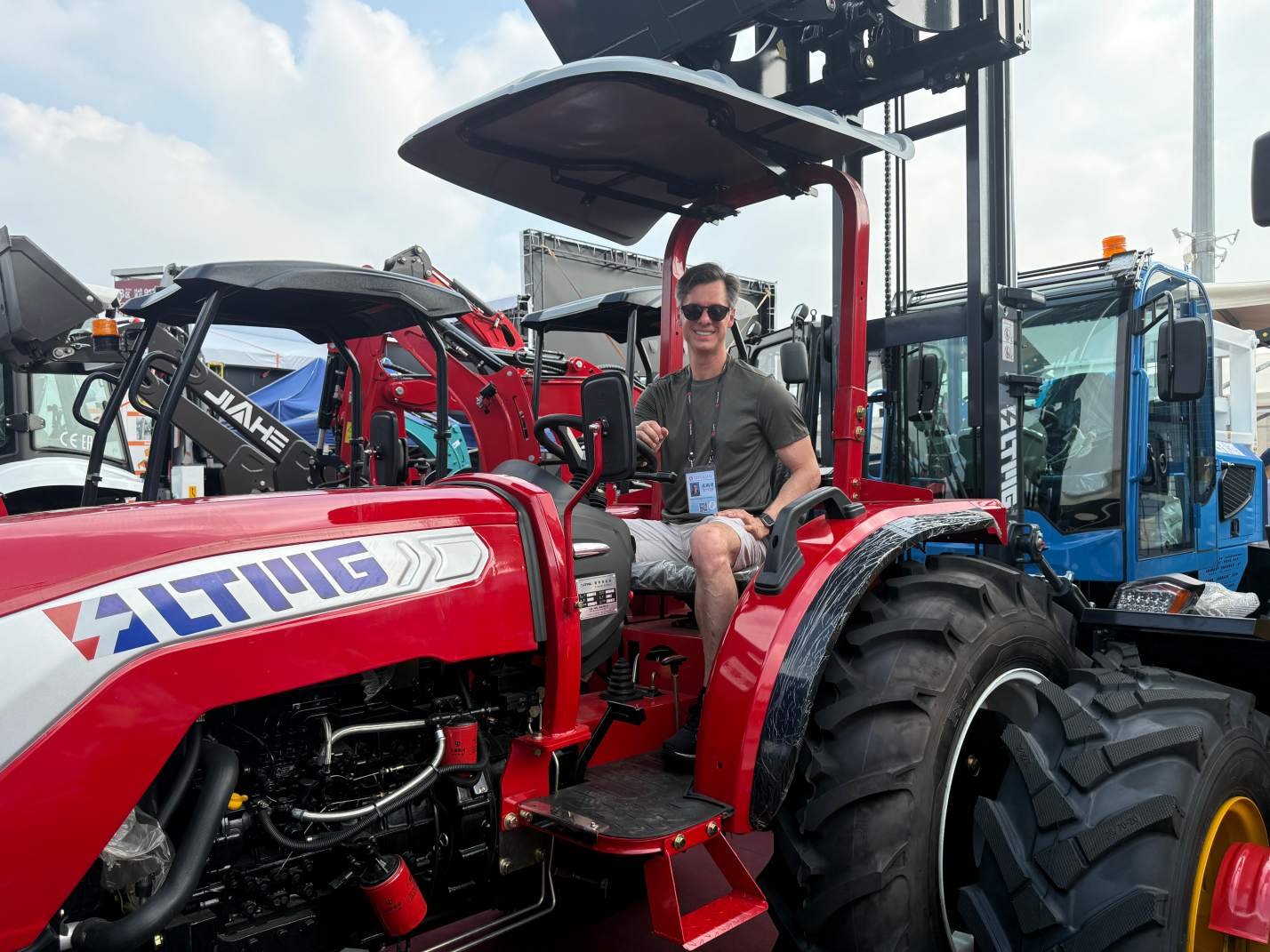
Comment choisir le tracteur adapté à la taille de votre exploitation : un guide d’achat stratégique
Feb 09, 2026
1. Introduction : Pourquoi un mauvais tracteur peut compromettre la rentabilité de votre exploitation agricoleDans le paysage agricole mondial en pleine mutation de 2026, la mécanisation ne se limite plus au remplacement du travail manuel ; il s’agit d’optimiser les faibles marges de l’agro-industrie. Choisir une tracteur agricole est l'un des investissements en capital les plus importants qu'une exploitation agricole puisse réaliser.Cependant, un écueil fréquent pour de nombreux gestionnaires est l'inadéquation entre la taille de l'exploitation et les spécifications des machines.Unités sous-dimensionnées : entraînent une sollicitation accrue du moteur, des pannes fréquentes et des ratés lors des semis ou des récoltes.Unités surdimensionnées : entraînent une consommation excessive de carburant, des primes d’assurance plus élevées et des frais d’entretien inutiles.Ce guide s'appuie sur l'expertise du secteur pour vous aider à équilibrer la puissance, les exigences du sol et le coût total de possession (CTP) afin de garantir que votre prochain tracteur agricole soit un atout et non un fardeau.2. Adapter la puissance du tracteur à la taille de l'exploitationLa superficie de votre terrain est le principal facteur déterminant le type d'équipement nécessaire. Vous trouverez ci-dessous un tableau expliquant comment la superficie influe généralement sur les besoins en énergie.2.1 Petites exploitations agricoles (20-25 hectares)Puissance recommandée : 25 à 50 chPrincipales applications : vergers, vignobles, serres et petites cultures maraîchères.Avantage stratégique : Ces unités compactes offrent une grande maniabilité dans les espaces restreints et une consommation de carburant nettement inférieure. Elles sont idéales pour les travaux de labour légers, la tonte et la pulvérisation.2.2 Exploitations agricoles de taille moyenne (20 à 100 hectares)Puissance recommandée : 60 à 100 chPrincipales applications : Culture céréalière générale, production de foin et de fourrage, et élevage.Avantage stratégique : Il s’agit de la catégorie « utilitaire ». Ces tracteurs offrent un débit hydraulique suffisant pour alimenter des outils de puissance moyenne tout en restant suffisamment économiques pour les travaux quotidiens. 2.3 Opérations à grande échelle (plus de 100 hectares)Puissance recommandée : 100+ CVPrincipales applications : Cultures en rangs à grande échelle (blé, maïs, soja), labour profond intensif et transport à grande échelle.Avantage stratégique : La forte traction et les systèmes de transmission avancés permettent à ces machines de tirer des outils de grande largeur, couvrant ainsi plus de terrain en moins de passages – un atout essentiel pour les périodes de travail tributaires des conditions météorologiques.Superficie de l'exploitation (en hectares)Plage de puissance recommandéeCultures les mieux adaptéesFonctionnalités clés prioritaires1 – 2025 à 50 CVLégumes, fruits, baiesRayon de braquage et consommation de carburant20 – 10060 à 100 CVCéréales, foin, bétailPolyvalence et puissance hydrauliquePlus de 100100 – 200+ CVMaïs, blé, sojaCompatibilité traction et GPS3. Quatre facteurs critiques au-delà de la superficieSi la taille constitue un point de départ, les achats professionnels nécessitent une analyse plus approfondie de l'environnement opérationnel.Topographie (Plaines vs Collines) : Si votre terrain présente des dénivellations importantes, un tracteur 4x4 est indispensable pour des raisons de sécurité et de stabilité. Sur des surfaces planes et stabilisées, un modèle 2x4 peut suffire.Composition du sol : L'argile lourde nécessite une force de traction nettement supérieure (et donc un rapport puissance/poids plus élevé) que le limon sableux.Spécificités des cultures : Les cultures en rangs nécessitent des largeurs de pneus spécifiques pour éviter le tassement du sol, tandis que les vergers peuvent nécessiter des conceptions spécialisées à « voie étroite » pour passer entre les arbres.Heures d'utilisation annuelles : Si le tracteur doit fonctionner plus de 1 000 heures par an, privilégiez les modèles haut de gamme offrant une durabilité accrue et des cabines ergonomiques afin de réduire la fatigue de l'opérateur.4. Tracteur 2 roues motrices vs. Tracteur 4 roues motrices : Quel système de transmission convient à votre terrain ?Le choix du système d'entraînement repose sur un équilibre entre le coût initial et les performances sur le terrain.Avantages des véhicules à deux roues motrices : prix d’achat initial plus bas, entretien mécanique simplifié et rayon de braquage plus court. Idéal pour les terrains secs et plats et les travaux utilitaires légers.Avantages des véhicules à quatre roues motrices (ou à quatre roues motrices) : traction supérieure sur sols humides, boueux ou meubles. Ils réduisent le patinage des roues, ce qui permet de réaliser des économies de carburant et de limiter l’usure des pneus. En 2026, les véhicules à quatre roues motrices sont devenus la norme pour la plupart des tracteurs agricoles commerciaux grâce à leur productivité accrue.5. Analyse du coût total de possession (CTP)Un acheteur professionnel ne se fie pas uniquement au prix affiché. Pour calculer la valeur réelle d'un tracteur, tenez compte des éléments suivants :Coût d'acquisition : taux de financement et prix initial.Efficacité énergétique : L’indicateur « litres par hectare » est plus important que l’indicateur « litres par heure ».Maintenance et pièces détachées : Disponibilité des filtres, joints et composants spécialisés dans votre région.Valeur de revente : Les marques établies conservent souvent 40 à 60 % de leur valeur après cinq ans, tandis que les marques « sans nom » peuvent se déprécier beaucoup plus rapidement.6. Erreurs courantes à éviter lors des achatsLa course à la puissance pour le prestige : acheter plus de puissance que nécessaire pour vos outils entraîne un tassement du sol et un gaspillage de carburant.Ignorer la compatibilité des outils : assurez-vous que la prise de force (PDF) et les commandes hydrauliques de votre tracteur correspondent à vos semoirs, charrues ou presses à balles existants.Négliger le service après-vente : une panne de tracteur en pleine période de semis représente un désastre financier. Assurez-vous que votre fournisseur dispose d’un réseau de pièces détachées performant et d’une assistance technique locale.7. Conclusion : Prendre une décision éclairéeLe tracteur idéal est celui qui minimise vos coûts par hectare tout en maximisant votre rendement. En choisissant la puissance appropriée à la taille de votre exploitation et en tenant compte des spécificités de votre sol et de votre topographie, vous pouvez vous procurer une machine qui assurera votre croissance pendant une décennie, voire plus.Besoin d'une solution personnalisée pour la manutention ou l'agriculture ? Choisir le tracteur agricole idéal implique de trouver le juste équilibre entre performances techniques et budget. Contactez notre équipe d'experts dès aujourd'hui pour une consultation personnalisée ou téléchargez notre catalogue de tracteurs 2026 pour comparer les derniers modèles haute performance. Souhaiteriez-vous que nous vous fournissions un devis spécifique pour un modèle de 50 CV ou de 100 CV en fonction de votre type de culture actuel ?