Que peut faire une chargeuse-pelleteuse ? 10 applications courantes
Aug 21, 2026
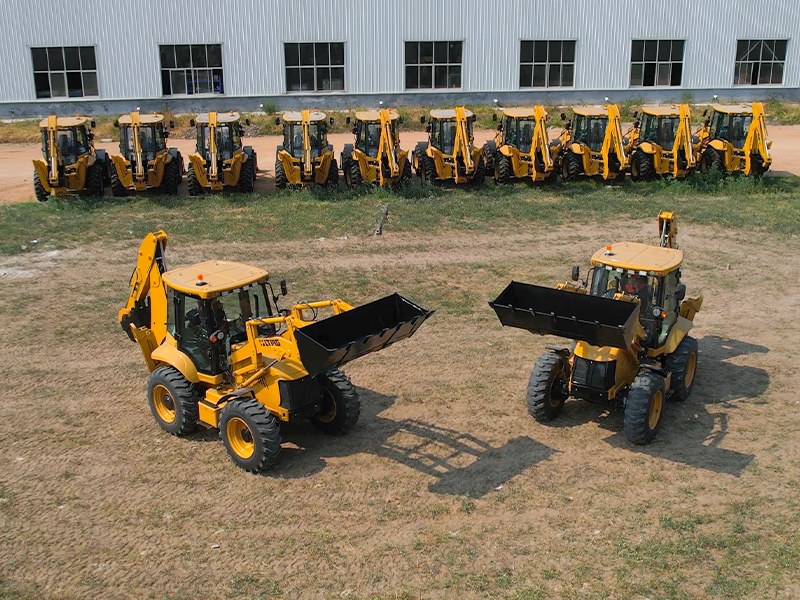
Une chargeuse-pelleteuse peut être utilisée pour le creusement de tranchées, le chargement de terre et de granulats, le remblayage d'excavations, la préparation de sites, l'entretien des routes, l'installation de réseaux, la manutention de matériaux agricoles, le défonçage de chaussées et une large gamme de tâches de construction générale.La raison pour laquelle il y en a tant chargeuse-pelleteuse L'un de ses avantages est qu'une seule machine combine un chargeur frontal et une excavatrice arrière.Une chargeuse-pelleteuse se compose généralement de trois éléments principaux :Godet de chargeur frontal pour charger, transporter, pousser et niveler des matériauxUn châssis de type tracteur qui offre mobilité et maniabilitéUne pelle rétro pour travaux d'excavation Lors des travaux d'excavation, les stabilisateurs arrière sont généralement abaissés afin d'offrir une plateforme de travail plus stable. Selon le modèle, la machine peut également être équipée d'une transmission intégrale (4RM), d'un circuit hydraulique auxiliaire, d'attaches rapides, d'un bras extensible et de différentes configurations de stabilisateurs.Cette conception distingue également une chargeuse-pelleteuse d'une pelle hydraulique. Les pelles hydrauliques sont principalement conçues pour le creusement et la manutention de matériaux, tandis que les chargeuses-pelleteuses sont mieux adaptées aux travaux nécessitant une alternance fréquente entre les opérations d'excavation et de chargement sur un même chantier.Alors, que peut faire une chargeuse-pelleteuse ? Voici 10 de ses applications les plus courantes. 1. Excavation et tranchées L'excavation est l'une des applications les plus courantes des chargeuses-pelleteuses. La pelle rétro peut être utilisée pour creuser :tranchées pour canalisations d'eau et de drainagetranchées pour câbles ou conduits électriquesSystèmes d'irrigationtranchées de fondation en bandesPetites fondationsponceauxTranchées de services publics souterraines générales Un godet de pelle rétro standard convient aux travaux de terrassement généraux, tandis qu'un godet plus étroit godet de tranchée peut aider à contrôler la largeur des tranchées et à réduire les excavations inutiles.Les chargeuses-pelleteuses sont particulièrement pratiques lorsqu'il faut également déplacer les matériaux excavés. Une fois la tranchée terminée, l'opérateur peut repositionner la machine et utiliser le godet du chargeur frontal pour évacuer les déblais ou remblayer la tranchée.La principale limitation réside dans l'ampleur des travaux d'excavation. Lors du choix d'une machine, il convient de prendre en compte des facteurs tels que la profondeur de creusement maximale, la portée de creusement, la force d'arrachement, les caractéristiques du sol et la productivité requise.Pour les travaux d'excavation profonde continus ou les projets de terrassement à grande échelle, une excavatrice dédiée est généralement plus productive. 2. Chargement et manutention des matériaux Le chargeur frontal permet à une chargeuse-pelleteuse de manipuler une large gamme de matériaux en vrac, notamment :SolSableGravierPierre concasséePaillisdébris de constructionMatériau de remblayageMatériaux de construction généraux Les tâches courantes comprennent le chargement des camions, le déplacement de la terre excavée, l'épandage de granulats, le remblayage des tranchées et le nettoyage des chantiers.Un seau standard à usage général suffit pour la plupart des tâches de manutention de matériaux en vrac. Seau 4 en 1 peut offrir des fonctions supplémentaires telles que le grappinage, le nivellement, le terrassement et le déversement contrôlé.Lorsque la machine, l'accessoire et la capacité de charge nominale sont correctement adaptés, fourches à palettes peut également être utilisé pour déplacer des matériaux palettisés.Toutefois, si le travail consiste principalement en un chargement continu et à volume élevé, une chargeuse sur pneus dédiée offrira généralement une configuration de machine plus adaptée et une productivité plus élevée.C’est pourquoi une chargeuse-pelleteuse est mieux adaptée aux applications mixtes où le chargement ne représente qu’une partie du travail global. 3. Construction et entretien des routes Une chargeuse-pelleteuse de chantier est également couramment utilisée pour la réparation et l'entretien des routes.Les tâches typiques comprennent :Creuser des fossés de drainageRéparation des ponceauxExcavation des accotementsChargement des agrégatsEnlèvement du revêtement endommagéRemblayage des excavations pour les services publicsDéblaiement des débris de construction Lorsqu'il est équipé d'un brise-roche hydraulique, la pelle rétro arrière peut briser le béton ou l'asphalte avant que le godet du chargeur frontal n'enlève les matériaux brisés.Selon la configuration des accessoires, des balayeuses et autres outils d'entretien routier peuvent également être installés pour étendre encore les capacités de la machine.Une chargeuse-pelleteuse ne peut remplacer les niveleuses, les finisseurs, les fraiseuses ou les rouleaux compresseurs sur les grands chantiers routiers. Son avantage réside dans sa capacité à réaliser, avec une seule machine, plusieurs tâches de soutien et de construction à petite échelle. 4. Installation et réparation des services publics Les travaux de voirie sont particulièrement bien adaptés aux chargeuses-pelleteuses, car les deux extrémités de la machine peuvent être utilisées au cours d'un même projet. Un processus de réparation de service public typique peut comprendre :Ouvrir le trottoirCreuser une tranchéeTuyaux ou câbles exposésDéplacement des matériaux excavésRemblayage de la tranchéeNettoyage de la zone de travail Un godet de pelle rétro ou de tranchée standard convient pour les travaux d'excavation. Un marteau hydraulique permet de démolir le béton ou le revêtement, tandis qu'une tarière peut être adaptée pour certains trous de poteaux électriques ou autres applications de forage.Avant d'utiliser une chargeuse-pelleteuse pour des travaux de construction de réseaux, les entrepreneurs doivent vérifier la profondeur et la largeur requises de la tranchée, l'emplacement des réseaux souterrains, les conditions du sol, l'espace de travail disponible et les exigences en matière d'accessoires.Pour les canalisations profondes ou les tranchées continues sur de longues distances, une excavatrice dédiée peut encore offrir une productivité supérieure. 5. Aménagement paysager Les projets d'aménagement paysager nécessitent souvent des travaux d'excavation, de nivellement et de manutention de matériaux, ce qui en fait une autre application appropriée pour les chargeuses-pelleteuses. Les tâches d'aménagement paysager courantes comprennent :Creuser des fossés de drainageCreuser de petits étangsPréparation des zones de plantationEnlever le solDéplacer du gravier ou du paillisManipulation de rochesÉvaluation sommaireNettoyage général du site Un accessoire de tarière peut être utilisé pour percer des trous pour les poteaux de clôture ou des trous de plantation.Une pince ou un pouce hydraulique peuvent améliorer le contrôle lors de la manipulation de roches, de branches, de troncs ou de débris irréguliers.Le godet du chargeur frontal peut ensuite être utilisé pour déplacer de la terre, du gravier, du paillis et d'autres matériaux d'aménagement paysager sur le site.La principale limitation réside dans la taille de la machine. Sur les pelouses déjà aménagées, les terrains meubles, les jardins résidentiels ou les chantiers très exigus, une mini-pelle ou un autre engin compact peut offrir une meilleure maniabilité et perturber moins le sol. 6. Travaux de démolition Les chargeuses-pelleteuses peuvent effectuer des travaux de démolition légers, notamment sur les projets qui nécessitent à la fois le concassage des matériaux et le nettoyage des débris.Un marteau hydraulique peut être utilisé pour casser :Dalles de bétonTrottoirsAlléesRevêtement en asphaltestructures en maçonneriePetites structures pavées Une fois le matériau brisé, l'opérateur peut utiliser un godet, une pince ou tout autre accessoire de manutention approprié pour ramasser et évacuer les débris.Cela rend les chargeuses-pelleteuses adaptées aux projets de rénovation, à la réparation des routes, à la préparation des terrains et aux petits travaux de démolition.La démolition de structures importantes, en revanche, relève d'une autre catégorie d'applications. Si le projet exige une plus grande hauteur de travail, des outils de démolition plus lourds, une force d'excavation supérieure ou une rotation à 360 degrés, une pelle hydraulique dédiée est généralement plus appropriée. 7. Agriculture et travaux agricoles Les chargeuses-pelleteuses sont également très pratiques dans les exploitations agricoles car les opérations agricoles impliquent rarement un seul type de tâche. Les applications courantes comprennent :Creuser des fossés de drainageExcavation de tranchées d'irrigationInstallation des conduites d'eauCreuser des trous pour les poteaux de clôturePlanter des arbresDéplacement de terre ou d'agrégatsEntretien des chemins agricolesNettoyage des zones autour des bâtiments agricolesSoutien aux travaux de construction et de réparation agricoles Une tarière peut être utilisée pour percer des trous pour les poteaux de clôture ou des trous de plantation.Les fourches à palettes peuvent manipuler certains matériaux emballés ou palettisés, tandis que le godet du chargeur peut déplacer de la terre, du gravier, du fumier et d'autres matériaux en vrac dans les limites de la capacité nominale de la machine.Pour les applications agricoles, les acheteurs doivent porter une attention particulière à la transmission intégrale, au type de pneus, aux conditions de terrain boueuses, à la garde au sol, au poids de la machine, à la largeur d'accès et au type de terrain. Une machine plus puissante n'est pas forcément un meilleur choix pour les travaux agricoles. Si elle est trop lourde ou trop volumineuse, elle risque de ne pas pouvoir accéder aux zones où les travaux doivent être effectués. 8. Déneigement Les chargeuses-pelleteuses peuvent également être utilisées pour le déneigement hivernal, notamment par les entrepreneurs ou les municipalités qui cherchent à accroître l'utilisation de leur matériel tout au long de l'année.Les zones de travail typiques comprennent :RoutesParkingssites industrielschemins d'accès agricolesinstallations municipaleschantiers de construction Si le simple fait de pousser la neige sur le côté ne suffit pas, le godet de la chargeuse peut également charger la neige dans des camions pour son évacuation.Pour les opérations axées principalement sur le déneigement à grande échelle, les chargeuses sur pneus dédiées ou les camions-citernes de déneigement sont généralement plus productifs. Une chargeuse-pelleteuse est mieux adaptée comme extension hivernale d'un équipement déjà utilisé pour la construction, les travaux municipaux ou l'agriculture. 9. Préparation du site Les chargeuses-pelleteuses sont fréquemment utilisées lors des premières étapes de la préparation d'un site car elles peuvent effectuer à la fois des travaux d'excavation et de chargement.Les emplois typiques comprennent :Enlever les débris meublesFouilles à petite échelleDébroussaillage du terrain accidentésol en mouvementÉvaluation sommaireremblayageChargement des matériaux sur les camions pour leur enlèvement Un godet de chargeuse peut accomplir la plupart de ces tâches.Si le site contient du sol compacté, du béton, de la végétation ou des débris irréguliers, des accessoires tels que des rippers, des grappins, des brise-roches hydrauliques ou des godets 4 en 1 peuvent également être utilisés.Pour les projets de terrassement de grande envergure, les entrepreneurs auront généralement toujours besoin d'excavatrices, de bulldozers, de niveleuses et de chargeuses sur pneus spécialisés. Une chargeuse-pelleteuse est donc mieux adaptée comme machine de soutien polyvalente pour la préparation des chantiers plutôt que comme remplacement complet d'une flotte entière d'engins de terrassement. 10. Travaux de construction municipaux et généraux Les services municipaux et les entrepreneurs généraux traitent souvent différents types de travaux d'un jour à l'autre, voire d'une heure à l'autre.La même équipe peut réparer une conduite d'eau le matin, nettoyer un fossé de drainage l'après-midi, puis se rendre sur un autre chantier pour charger des granulats.Les utilisations courantes des chargeuses-pelleteuses municipales comprennent :réparation de conduites d'eauentretien du système de drainagesoutien à la réparation des routesTravaux de ponceauxTranchéesremblayagemanutention des matériauxNettoyage des ruesdéneigementTravaux publics généraux Des godets, des brise-roches hydrauliques, des tarières, des balayeuses, des fourches à palettes et des accessoires de déneigement peuvent encore étendre les capacités de la machine. Ces applications mixtes démontrent l'avantage principal d'une chargeuse-pelleteuse : elle n'offre peut-être pas la productivité la plus élevée pour chaque tâche individuelle, mais elle peut effectuer de nombreuses tâches différentes avec une seule machine. Conclusion : Choisir la chargeuse-pelleteuse adaptée à votre application Les chargeuses-pelleteuses ont une gamme d'applications très large car une seule machine combine l'excavation, le chargement, la manutention de matériaux, la mobilité sur le chantier et la polyvalence des accessoires.Ils peuvent être utilisés pour le creusement de tranchées pour les services publics, le chargement d'agrégats, l'entretien des routes, l'aménagement paysager, la démolition légère, l'entretien agricole, le déneigement, la préparation des sites et un large éventail de tâches de construction municipales.Cependant, cela ne signifie pas qu'une chargeuse-pelleteuse soit la meilleure machine pour tous les projets.Pour des travaux d'excavation intensifs et continus, une pelle hydraulique dédiée peut s'avérer plus efficace. Pour des opérations de chargement continu et à volume élevé, une chargeuse sur pneus sera généralement plus avantageuse.Les chargeuses-pelleteuses sont mieux adaptées aux projets qui privilégient la polyvalence et nécessitent des changements fréquents de tâches plutôt qu'une productivité maximale dans une seule opération spécialisée. Si vous choisissez une chargeuse-pelleteuse pour la construction, l'agriculture, les travaux publics ou les applications municipales, les principaux facteurs à comparer avant de choisir un modèle sont les suivants :Profondeur de creusementcapacité du godet de chargeuseexigences du système hydrauliqueCompatibilité des accessoiresExigences relatives aux quatre roues motricesConditions du terrainFacilité d'entretienDisponibilité des pièces Vous pouvez consulter nos modèles de chargeuses-pelleteuses pour comparer les différentes configurations, ou contacter l'équipe LTMG pour obtenir des spécifications adaptées à vos besoins spécifiques. Nous vous aiderons à choisir la chargeuse-pelleteuse idéale pour vos conditions de travail.